Every document editor eventually asks you the same question: what mode are you in right now? Editing. Suggesting. Viewing. You pick one before you can do anything, and the wrong choice has consequences — a "Suggesting" edit that silently never lands, a "Viewing" session where you can't point at anything.
That's not an accident. A document is one sequence of characters, so something has to arbitrate who's allowed to touch it and how. The mode picker is the bill for collaborating on something inherently single-threaded.
A canvas doesn't have that problem
Aviquill's canvas is spatial, not linear. Every block has its own coordinates — there's no shared cursor position to fight over. I can edit a block in one corner while you drag a checklist into place on the other, and neither of us is in anyone's way. Nothing to arbitrate, so nothing needs a mode.
What replaces the mode picker is just showing you where everyone already is — named, colored cursors drifting across the canvas in real time. You glance over and know where everyone's hands are, the way you would around a shared whiteboard.
The mode picker isn't there because collaboration is hard. It's there because a single stream of text can only have one truth at a time.
Talk gets a scope, not a sidebar
Cursors handle the moment — where you are, what you're pointing at. But real collaboration also produces talk that should last, and Docs crams all of it into one comment margin regardless of whether it's about a typo or the whole draft.
Aviquill splits that talk by where it belongs. Each block has its own chat, so a conversation about that specific note stays attached to it.
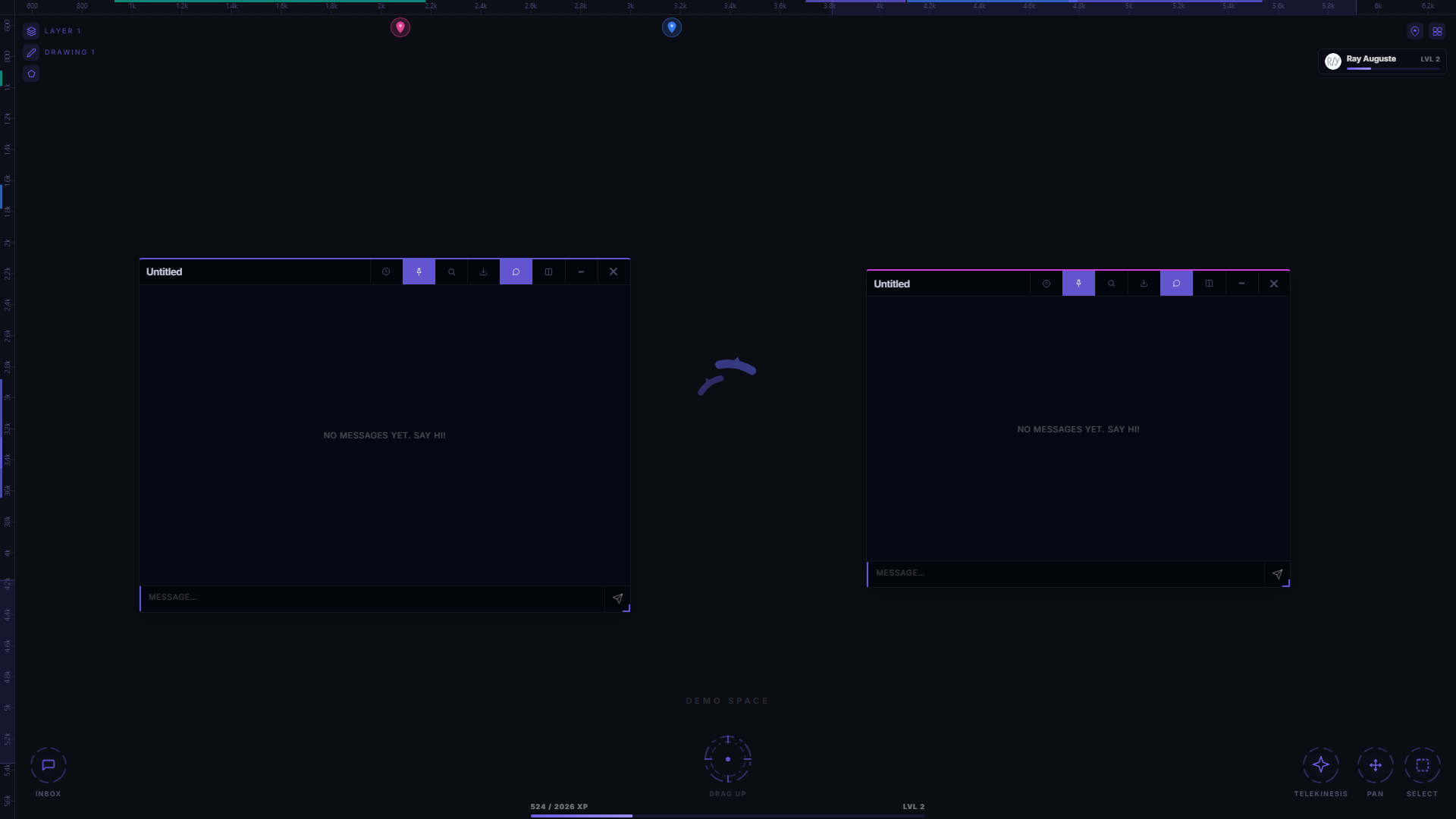
Each space has its own chat channels for talk that's about the project as a whole, not any single block.
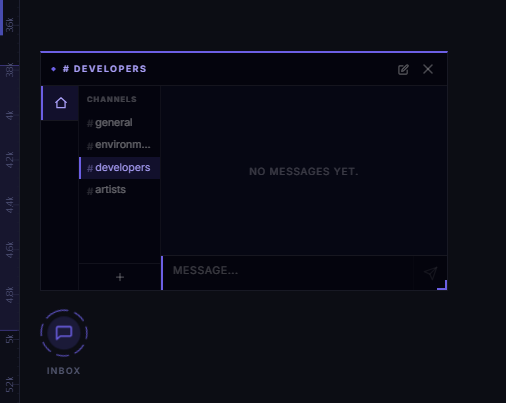
Docs can't make that distinction — there's one document and one margin, so every comment looks the same regardless of scope. A canvas can, because every note already has its own identity.
That's the actual fix. Several people thinking and talking about different things at once doesn't need to be forced through a single stream with one margin for commentary. Give presence and conversation their own scopes, and most of the friction just stops being necessary.